A Curation of all Things Renovation


Bathroom Layout Mistakes That Cost Thousands (And How to Avoid Them in Australia)

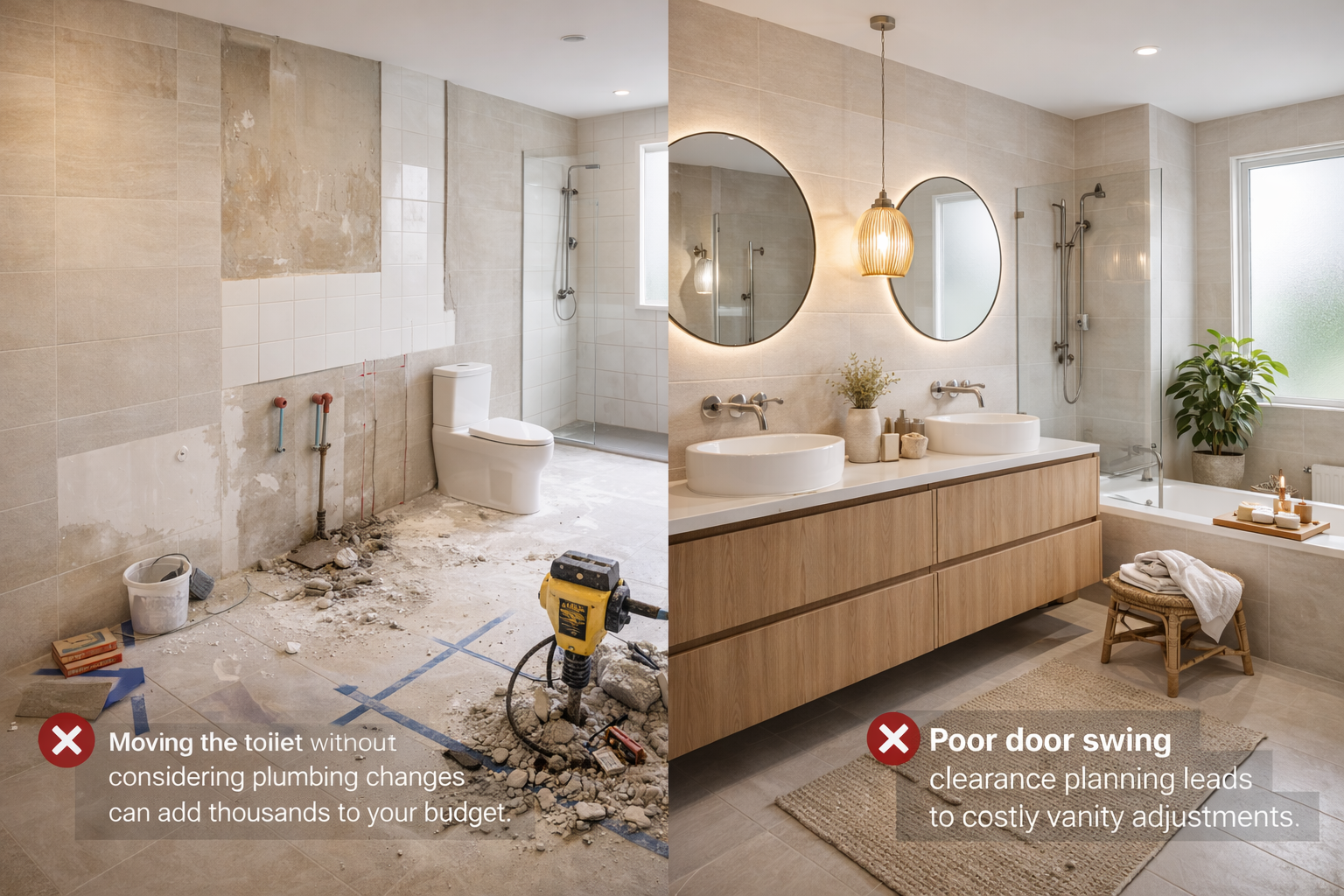
If you want to protect your bathroom renovation budget, layout planning matters more than tile selection, tapware finishes or vanity style.
Across Australia, the biggest renovation blowouts don’t come from choosing the “wrong” products. They come from poor layout decisions made too early.
This guide breaks down the most expensive bathroom layout mistakes — and how to avoid them before demolition begins.
Why Bathroom Layout Planning Is Critical
Search term target:
Bathroom layout mistakes Australia
Bathroom renovation layout planning
Your bathroom layout determines:
- Plumbing relocation costs
- Waterproofing scope
- Structural modification
- Electrical repositioning
- Cabinet customisation
Changing finishes later is manageable.
Changing layout mid-build is expensive.
Mistake 1: Moving Plumbing Without Understanding the Cost
Target keyword:
Cost to move toilet in bathroom renovation Australia
One of the most common and costly errors is relocating a toilet or shower without fully understanding the implications.
In most Australian homes built on concrete slabs, moving a toilet requires:
- Cutting into the slab
- Re-grading waste pipes
- Re-waterproofing
- Re-tiling
This can add $3,000 to $8,000 depending on access and site conditions.
Unless the existing position is dysfunctional, keeping plumbing locations intact is often the smartest financial decision.
Mistake 2: Ignoring Door Swing Clearance
Target keyword:
Bathroom door swing clearance requirements
It sounds minor, but improper door clearance can cause:
- Vanity drawer conflicts
- Towel rail obstruction
- Shower screen interference
- Full cabinet redesign mid-installation
Always confirm:
- Door arc
- Minimum 700mm walkway clearance
- Drawer projection depth
- Shower entry clearance
Simple measurements prevent expensive rework.
Mistake 3: Oversizing the Vanity
Target keyword:
Best vanity size for small bathroom Australia
Bigger vanities often look impressive in showrooms but fail in tight bathrooms.
Common Australian bathroom widths:
- 1.5m
- 1.8m
- 2.1m
- 2.4m
Installing a 1500mm vanity in a 1700mm-wide bathroom eliminates usable clearance.
Instead, choose proportion over scale.
A well-sized 750mm or 900mm vanity often performs better than a cramped oversized unit.
For practical examples, see our [Vanity Size Guide for Small Bathrooms].
Mistake 4: Designing Around Pinterest, Not Plumbing
Pinterest and Instagram showcase stunning bathrooms with relocated freestanding tubs and repositioned showers.
What’s rarely shown is the hidden cost of:
- Drain relocation
- Floor regrading
- Structural reinforcement
- Additional waterproofing
Design should follow plumbing logic — not social media trends.
Mistake 5: Forgetting Storage Requirements
Target keyword:
Bathroom storage planning tips
Minimalist bathrooms are beautiful in photography.
In real life, they require:
- Cleaning product storage
- Towel storage
- Electrical access inside cabinetry
- Drawer organisation
Drawers outperform cupboards in most Australian bathrooms.
Wall-hung vanities improve visual space but must be paired with adequate depth.
Mistake 6: Poor Lighting Planning
Target keyword:
Bathroom lighting layout Australia
Many renovations rely on a single ceiling downlight.
Better planning includes:
- Task lighting at mirrors
- Ambient lighting for warmth
- Proper ventilation fan integration
- IP-rated fittings for wet zones
Lighting changes are inexpensive during planning but costly after tiling.
Mistake 7: Not Considering Future Maintenance
Layout decisions should consider:
- Easy shower screen access
- Tile grout maintenance
- Accessibility over time
- Replacement part availability
Bathrooms should function for 10–15 years minimum.
Smart Bathroom Layout Planning Checklist
Before demolition begins, confirm:
- Plumbing positions remain efficient
- Toilet placement meets clearance guidelines
- Vanity depth suits room width
- Door swing is tested
- Storage volume is realistic
- Lighting is layered
- Waterproofing scope is clear
Renovators who confirm these early reduce cost overruns significantly.
When Is Layout Change Worth It?
Layout relocation makes sense when:
- Current layout is unsafe
- Shower placement causes water damage risk
- Storage is completely inadequate
- Accessibility requirements demand change
But layout change should be deliberate — not aesthetic impulse.
How to Plan Smarter
Instead of beginning with tile selection, start with:
- Floor plan sketch
- Plumbing mark-up
- Measurement confirmation
- Budget bracket alignment
Only once layout is locked should you explore curated product selections.
If you want balanced product selections matched to efficient layouts, explore our [Bathroom Renovation Kits].
Final Thoughts
Bathroom layout mistakes cost thousands because they affect everything downstream:
Plumbing
Waterproofing
Tiling
Cabinetry
Lighting
Smart renovators prioritise structure before style.
Clarity protects your budget.